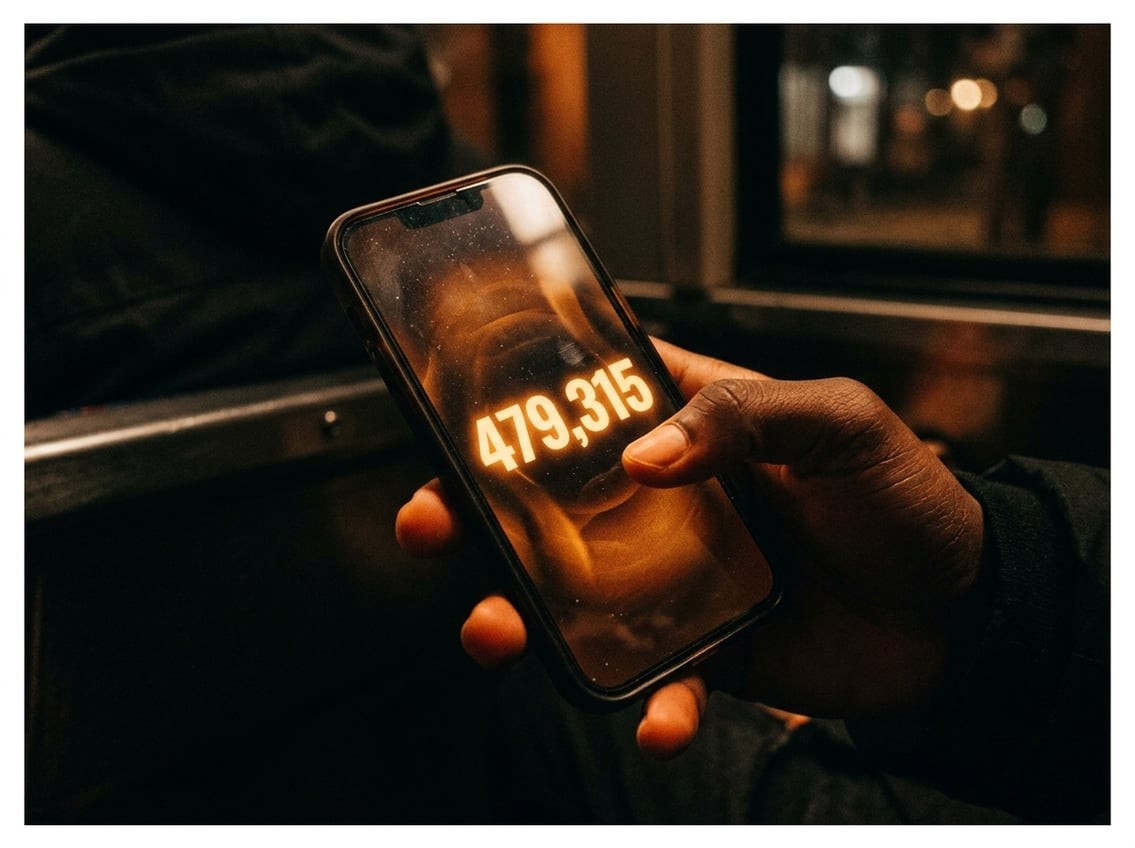
The progressive jackpot pokies is the most emotionally-loaded product on the shelf. Everyone in the pokies world knows it. The number climbs. The animation glows. The email arrives — someone in another country won it last night, thirteen point four million, the operator's press release features a photograph of the winner from behind. And in an important sense, everything about the machine is engineered to keep you spinning while that number climbs. This is a feature about what's actually happening inside the progressive-jackpot product at Australian PayID casinos, and what the ticker on the screen is actually representing.
The head keyword is payid pokies. Consider it dispatched.
What a progressive jackpot is, mechanically
A progressive jackpot is a prize pool that accumulates from a small percentage of every wager placed across a network of games or operators. That percentage is typically between half a per cent and two per cent, deducted from the game's stated return-to-player figure. The pool grows over time until someone wins it, at which point it resets to a seed value — usually a hundred thousand dollars or thereabouts — and starts growing again.
The mechanic is elegant in the way any tontine is elegant. Everyone contributes a tiny amount. Eventually one person receives a very large amount. In between, the pool grows, is displayed prominently, and pulls in more contributors precisely because it is growing prominently.
Where the money actually goes
On a game with, say, a 96 per cent stated return-to-player, the progressive-jackpot deduction reduces the effective non-jackpot return-to-player to somewhere between 94 and 95.5 per cent. The difference — the one to two per cent — is being redirected into the pool. If you win the jackpot, you have effectively recovered years' worth of that redirected contribution across a large number of players. If you don't, your session's return-to-player is meaningfully lower than the headline number suggests, because a slice of every bet was going to someone else's pool.
The three-tier structure
Most modern progressive jackpot games have three tiers — often called mini, major, and grand, or bronze/silver/gold, or similar. The mini resets frequently and pays out a modest amount (typically the equivalent of tens to hundreds of a player's average bet). The major resets less often and pays somewhere in the low-thousands range. The grand — the one on the flashing ticker — resets rarely, sometimes once a year across a whole network, and is where the eye-watering headline numbers come from.
The network vs the standalone
Two distinct kinds of progressive jackpot exist at PayID casinos. Network progressives pool contributions from many operators — sometimes dozens — running the same game. These are the ones with the biggest headline numbers. Microgaming's Mega Moolah network is the archetype and holds several of the industry's largest jackpot payouts on record. Standalone or in-house progressives pool contributions only from a single operator's player base. These have smaller headline numbers but hit meaningfully more often.
The commercial difference between the two matters for players. Network progressives are marketed hard, feel bigger, and are dominated by very-low-probability outcomes. Standalone progressives are marketed less, feel smaller, but produce more visible winners on any particular operator over any particular month. Neither is objectively better; they optimise for different emotional experiences.
The provider layer
A third structural layer worth mentioning is the game-provider-level progressive, where a studio like Microgaming, Pragmatic, or Play'n GO runs a network across all operators offering their games. This sits between the two poles above — larger than a standalone, smaller than a mega-network like Mega Moolah — and is where a lot of the mid-tier jackpot activity happens. The provider-level jackpot is often the one Australian players encounter most frequently without realising, because it is shared across a large number of operators without being marketed as prominently as the big network jackpots.
The network progressive is a lottery ticket sold to you as a pokies bet. The standalone progressive is closer to a pokies bet with a lottery seasoning on top. Neither is dishonest. It is worth knowing which one you're playing. On progressive structures
The mathematics, honestly
A network progressive jackpot at a hit-probability of, say, one in fifty million spins, with a typical bet size of two dollars and an average spin every six seconds, will be hit somewhere between once every eighteen months and once every three years across the network's aggregate play. For an individual player spinning at that bet size, the probability of hitting the grand tier over any single session of, say, three hundred spins, is astronomically low — comparable to significant lottery outcomes.
What the individual player is doing when they play a progressive-jackpot game is buying two things at once. The base game, with its slightly-reduced return-to-player after the jackpot deduction. And the jackpot itself, which is an implicit lottery ticket priced into every spin. Whether that combined product is a good deal depends on what you value: the jackpot ticket is very expensive in per-spin terms, but the marginal cost against the base-game experience is small. Reasonable people disagree.
The "must-drop" variant
A subset of progressive jackpots are marketed as "must-drop-by" jackpots — the pool is guaranteed to be paid out before it exceeds a stated ceiling, or before a stated date. This is a marketing device rather than a fundamental change to the mathematics. The must-drop mechanic slightly compresses the timing distribution of the jackpot's release but does not change the average expected value to the player of a single spin. It does change the emotional shape of playing it, which is what the marketing is banking on.
Who wins, and what happens after
The winners of network progressive jackpots are, empirically, a somewhat random slice of the game's global player base. Being an Australian player of an offshore operator does not systematically disadvantage a player relative to a European or South American player of the same operator; the game is the same, the network is the same, the pool is the same. Where things differ is in what happens after the win.
Reputable operators have documented processes for large-jackpot payouts, including identity verification, source-of-funds documentation, and typically a period of holding before release. This is not withholding; it is standard AML compliance and applies to any large win, jackpot or otherwise. For a player who has done modest KYC to open the account and has been playing consistently, the process is straightforward. For a player whose activity has been unusual, or whose account documentation is thin, the process can be longer and more involved.
Less reputable operators sometimes struggle with large jackpot payouts, either through cash-flow limitations they had not anticipated or through less-than-good-faith interpretation of their own bonus terms. The stories are enough of a genre that any player considering a serious commitment to a progressive-jackpot game should investigate the operator's history with large payouts as part of their due diligence.
The Australian tax question
One question that comes up in reader correspondence is whether a jackpot win at an offshore operator is taxable in Australia. The current position of the ATO is that gambling winnings are not assessable income for individual taxpayers who are not carrying on a business of gambling. That covers the overwhelming majority of jackpot winners. It does not cover professional gamblers or players whose activity looks systematically commercial. For a hobby player who wins a large jackpot, the amount is theirs; for a player whose gambling looks more like a business, professional advice is warranted before assumptions are made.
The payout schedule
The other operational detail worth knowing is that large network jackpots are frequently paid in structured schedules rather than a single lump sum, at some operators. This is disclosed in the terms and conditions of the individual game or operator; it is worth reading. A five-year payout schedule is a very different product from a single lump-sum wire, and the framing on the marketing material rarely makes this distinction visible.
The emotional product
What a progressive jackpot game is selling, at the emotional level, is the possibility of transformation. The base game is a pokies session; the jackpot layer is a story about a life being changed. The story is not fake — someone does win, occasionally, and their life is measurably changed. The story is also not the modal experience of playing the game. Most players who play progressive-jackpot pokies for years contribute their small percentage to the pool, receive base-game entertainment for their money, and never come close to the grand tier.
This is not, on its own, a criticism. Buying a lottery ticket once a week has a similar emotional structure and does not automatically constitute a bad decision. What matters is whether the player is doing the accounting honestly — knowing that the base-game return-to-player is reduced, knowing that the jackpot outcome is a very-low-probability event, and choosing accordingly. The problem arises when the emotional layer is doing the choosing for the player, and the mathematics is invisible underneath.
The culture around jackpot play
An informal culture has grown up around progressive-jackpot play at PayID casinos, and it is more visible now than it was five years ago. Streamer channels covering jackpot-focused sessions have built substantial audiences. Discord communities track jackpot values across networks and identify statistical outliers — jackpots that have grown unusually large without hitting. Some players self-describe as "jackpot hunters", though whether this identification maps to any actual edge in play is a separate question.
The straightforward observation is that no strategy exists to reliably win a progressive jackpot. The mathematics of a well-designed jackpot game does not permit a player-side edge; the game is memoryless and the probability of a hit on any given spin does not depend on the current jackpot value. What the jackpot-tracking culture actually produces, for its participants, is a sense of community and a set of shared reference points for what could be a lonely and mostly-losing pursuit. That is not nothing. It is also not an edge.
The streamer-driven distortion
One consequence of the streamer culture worth flagging is that streamers, in aggregate, produce a systematically misleading picture of what jackpot play looks like. A streamer who plays for eight hours a day, five days a week, will see meaningful jackpot hits at a rate that no casual player can match — not because the streamer is better, but because the sample size is orders of magnitude larger. Viewers extrapolating from streamer footage to their own play consistently overestimate hit frequencies. This is not the streamers' fault; it is what happens when you show highlights and expect the audience to weight them correctly. Very few audiences do.
What an honest player should know
Three practical things. First, the game's stated return-to-player is not the full RTP; a slice is going to the jackpot pool. Second, the jackpot ticket you're buying with each spin is an extremely expensive lottery ticket in per-outcome terms. Third, the culture that has grown up around jackpot play is genuine and has real emotional value for its participants, but does not confer any statistical advantage.
If you play progressive-jackpot pokies, playing them at a rate you can sustain across many sessions is probably the most important discipline. The base game will slowly attrit; the jackpot may or may not arrive; the discipline is in choosing your session length before you start, and holding to it regardless of the ticker's current value. This is not a strategy for winning. It is a strategy for continuing to enjoy playing.
A subordinate point worth adding. Progressive-jackpot games are typically not the best games to play with bonus funds. Most operators exclude progressive-jackpot games from bonus wagering contributions, or count them at a fraction of standard weighting, precisely because the jackpot layer makes their variance profile different from the base game. Reading the specific bonus terms is worth doing before assuming that a promotional deposit can be played on the jackpot game you had in mind. In many cases it can't, or it can but doesn't count toward the wagering requirements you'd need to clear. This is one of those small structural details that experienced players learn from a costly first mistake; it saves later players the same tuition if it is flagged early.
Reader questions
Is there a "best time" to play a progressive jackpot?
No. The probability of a hit does not depend on the jackpot's current size, its recent history, or the time of day. Jackpot values sometimes appear to correlate with hit frequency, but this is either coincidence or selection bias (players notice big jackpots getting hit; they don't count the small ones that get hit routinely). There is no timing edge.
Do PayID casinos honour progressive jackpot wins to Australian players?
Reputable ones, yes, subject to standard KYC and AML verification. Less reputable ones sometimes create obstacles. The operator's licensing jurisdiction is the strongest signal available — Malta and Isle of Man have documented redress processes if an operator does not honour a jackpot; Curaçao's newer framework is developing similar processes. Whether you'd want to rely on any of them in practice is a separate question.
What's the biggest jackpot ever paid out at an operator taking Australian players?
Depends on how you count. The largest network progressive on record is a nine-figure euro payout from Mega Moolah. A player based in an Australian-facing operator's network won a mid-eight-figure amount in 2023. These numbers are impressive; they are also the exception, not the rule. The vast majority of jackpots ever won are much smaller.
Are progressive jackpot pokies more or less "worth it" than standard pokies?
Neither, if we're doing the accounting honestly. Progressive-jackpot games have a lower base-game RTP but include a lottery ticket priced into each spin. Standard games have the full RTP but no lottery ticket. The expected value per spin is similar; the shape of possible outcomes is different. Which is "better" depends entirely on what shape of outcome you prefer.
18+ and responsible gambling
18+For Australian adults. Journalism, not endorsement.
Gambling Help Online · 1800 858 858 · Lifeline 13 11 14.